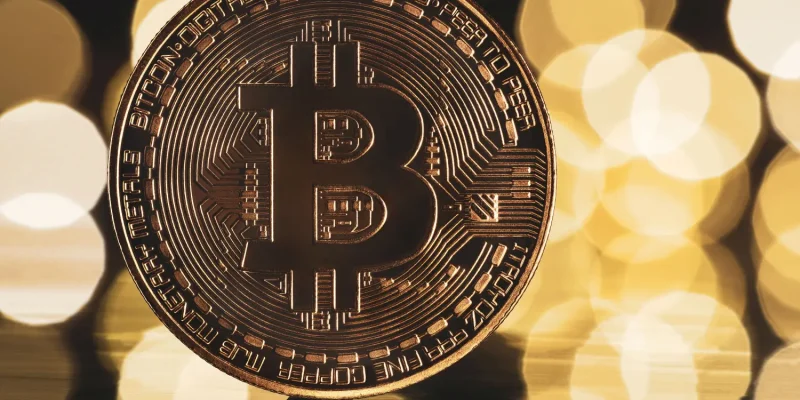
Bitcoin

Bitcoin Unveiled: A Deep Dive into the Digital Gold Revolution

Introduction: A New Dawn in Finance

In the annals of financial history, few innovations have captured the collective imagination quite like Bitcoin. Once dismissed as an arcane experiment for cryptography enthusiasts, Bitcoin has matured into a global phenomenon, challenging conventional notions of money, sovereignty, and value itself. To understand its enduring appeal and its implications for the future, one must delve beyond the price charts and speculative frenzy to uncover the philosophical, technological, and economic foundations that sustain this digital asset.

The Genesis of Bitcoin

The story of Bitcoin begins in 2008, amid the ashes of a devastating global financial crisis. Disillusioned by the opaque machinations of central banks and the fragility of traditional finance, an anonymous entity known only as Satoshi Nakamoto published the now-famous white paper titled Bitcoin: A Peer-to-Peer Electronic Cash System. This blueprint introduced a novel idea: a decentralized digital currency that enables direct transactions without the need for a trusted intermediary.

By January 2009, Nakamoto mined the genesis block, embedding within it a subtle political message referencing a bank bailout headline from The Times. This inscription revealed Bitcoin’s subtext—a critique of centralized monetary systems and an implicit promise of an alternative.

How Bitcoin Works: The Elegant Architecture

At its core, Bitcoin is a decentralized ledger maintained by a network of computers, or nodes, scattered across the globe. This ledger, known as the blockchain, records every transaction ever made with mathematical precision and immutability.

Key features include:

  • Decentralization: No single entity controls the network; decisions are made by consensus among participants.

  • Proof-of-Work: Transactions are verified by miners who solve complex cryptographic puzzles, ensuring security and preventing fraud.

  • Scarcity: Bitcoin’s supply is capped at 21 million coins, introducing digital scarcity akin to precious metals.

This architecture combines economic incentives with cryptography, forging a system resistant to censorship, fraud, and inflationary tampering.

Bitcoin as Digital Gold

Many enthusiasts and investors refer to Bitcoin as “digital gold.” The comparison is more than poetic. Like gold, Bitcoin is scarce, durable, portable, and divisible. Unlike gold, however, Bitcoin is not bound by geography or physical limitations. It can be transferred across borders within minutes, without the oversight of a central authority.

This narrative of digital gold has positioned Bitcoin as a hedge against inflation and currency debasement, especially in times of economic uncertainty. Institutional investors and corporations alike have begun to allocate portions of their balance sheets to Bitcoin, validating its role as a store of value in the digital age.

The Promise and the Peril

Bitcoin’s promise extends far beyond wealth preservation. For the unbanked and underbanked populations—estimated at over 1.7 billion people worldwide—Bitcoin offers access to a global financial network without the traditional gatekeepers.

Yet, this promise is not without peril. Bitcoin’s volatility remains a concern, as do questions about regulatory frameworks. Governments worldwide grapple with the balance between innovation and oversight, wary of illicit activities facilitated by pseudonymous transactions.

Environmental Concerns: A Heated Debate

No discourse on Bitcoin is complete without addressing its environmental footprint. The energy-intensive process of mining, driven by proof-of-work, has attracted criticism for its carbon emissions. Critics argue that Bitcoin’s network consumes more electricity than some nations.

Defenders counter that much of the mining activity taps into renewable energy sources and that Bitcoin incentivizes innovations in energy efficiency. Furthermore, some posit that comparing Bitcoin’s energy use to traditional banking infrastructure provides a more nuanced perspective.

A Global Tapestry of Adoption

From Wall Street boardrooms to rural communities in El Salvador, Bitcoin’s adoption tells a diverse story. El Salvador made headlines by becoming the first nation to adopt Bitcoin as legal tender, a bold experiment watched keenly by other developing economies.

Meanwhile, tech-savvy millennials in developed nations see Bitcoin as a means to diversify wealth and embrace a future unbound by legacy financial systems. Bitcoin ATMs, payment integrations, and peer-to-peer exchanges have proliferated, weaving the cryptocurrency into everyday economic life.

The Road Ahead: Evolution and Innovation

Bitcoin’s journey is far from complete. Developers continue to refine its ecosystem, addressing scalability challenges through innovations like the Lightning Network, which facilitates faster, cheaper transactions.

Moreover, the emergence of decentralized finance (DeFi) and non-fungible tokens (NFTs) broadens the horizon for blockchain technology, with Bitcoin often serving as the ideological bedrock for these decentralized experiments.

Navigating the Bitcoin Frontier

For the curious investor or observer, engaging with Bitcoin demands a measured approach. Education remains paramount—understanding private keys, cold storage, and market dynamics is essential to navigating the volatile terrain.

A few guiding principles:

  • Invest Responsibly: Only allocate what you can afford to lose.

  • Diversify: Bitcoin is not a panacea but a component of a broader financial strategy.

  • Stay Informed: Regulations, technological developments, and market sentiment evolve rapidly.

Conclusion: Bitcoin’s Enduring Legacy

Bitcoin’s legacy may ultimately lie not in its market capitalization or media hype, but in the questions it forces us to confront: What is money? Who controls it? How do we safeguard value in an increasingly digital world?

In its brief existence, Bitcoin has transformed from an obscure white paper to a trillion-dollar asset class, a testament to human ingenuity and the enduring quest for financial sovereignty. Whether it becomes the backbone of a new monetary order or remains an iconoclastic experiment, Bitcoin has irrevocably altered the discourse around money, trust, and freedom.

As the world watches, debates, and innovates, Bitcoin stands as a monument to the idea that sometimes, the most radical shifts begin with a single block.

What is your reaction?

Excited
0
Happy
0
In Love
0
Not Sure
0
Silly
0

You may also like

More in:Bitcoin